By: David Lewis and Shayne Champion | Published: 22 July, 2026 |  5 Min
Summary:
For any VSP (Victim Service Provider), a top concern should always be security. This is for more than ensuring funding—it comes down to protecting the people in their care from those that would do them harm. But how secure is your Comparable Database? This article will explore key considerations to ensure your data remains secure, your clients can rest assured that their personally identifiable information will remain private, and your organization can maintain compliance with legal requirements.
Security, Security, Security
For every health and human service organization worker, this thought has likely crossed their mind: is my case management system or Comparable Database secure?
For Victim Service Providers (VSPs), this question may come up even more frequently. It’s not hard to see why. VSPs work with data that, if breached, could put those they serve at heightened risk of harm. Additionally, funding from sources like the US Department of Housing and Urban Development (HUD) hinges on strict adherence to security standards for many of these organizations.
CaseWorthy is dedicated to helping VSPs take control of their data security. This includes preventing security breaches, mitigating crises, and remaining updated on the latest security standards. If there’s one thing that VSPs deserve, it’s having confidence in the security of their Comparable Database.
What Is a Comparable Database?
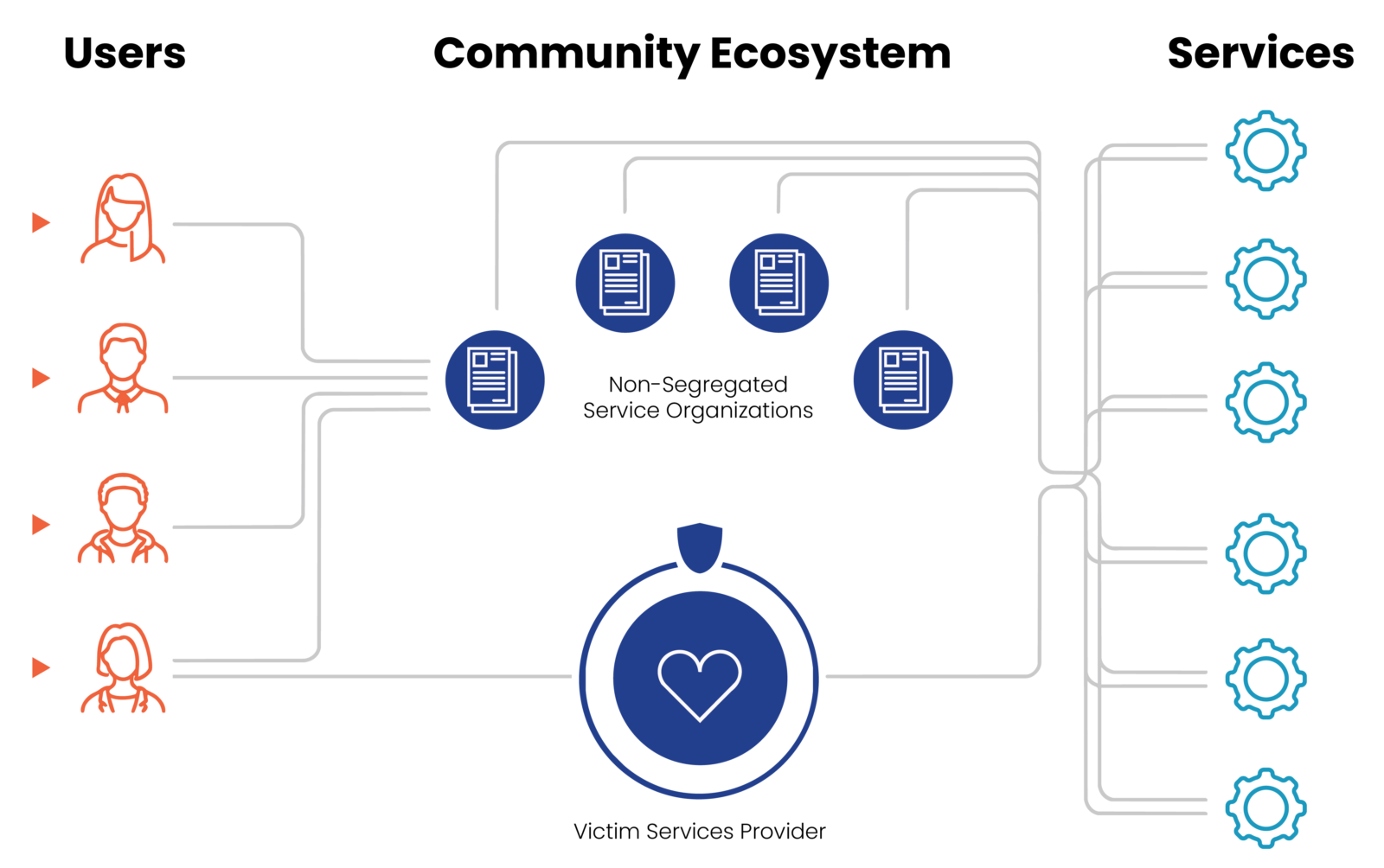
Put simply, a comparable database is “an alternative system that victim service providers use to collect client-level data over time and to generate aggregate reports based on the data.”
In other words, Comparable Databases are a relational database that meets all HMIS Data Standards and the minimum standards of HMIS privacy and security requirements, including HUD’s most recent reporting standards and comma separated value (CSV) format specifications.
Due to the sensitive nature of VSP beneficiaries, organizations focused on domestic violence survivors cannot input client-level information into certified local HMIS systems under HUD standard privacy and security settings. In order to qualify for government funding, VSPs need to know whether the data they are working with requires a Comparable Database.
Should I Be Using a Comparable Database?
This isn’t just a question of being compliant to government regulations; it’s essential to the safety of the people you serve. HUD provided a decision tree to help service providers evaluate whether they need to switch to a Comparable Database (the original decision tree can be accessed here):
Is your agency a VSP (Victim Service Provider)?
If YES, the agency cannot enter PII (personal identifying information) into HMIS*
If NO, continue to question 2
*You need a Comparable Database!
Does your agency receive funds from the Family Violence Prevention and Services Act (FVPSA), Office for Victims of Crime (OVC), or Office on Violence Against Women (OVW) and use those funds agency-wide or for agency administrative purposes?
If YES, all projects, regardless of project type, are prohibited from entering PII into HMIS*
(If NO, continue to question 3)
*You need a Comparable Database!
Does your agency receive funds from FVPSA, OVC, or OVW to support specific projects?
If YES, those specific projects cannot enter PII into HMIS*
If NO, continue to question 4
*You need a Comparable Database!
Does your agency receive funds from FVPSA, OVC, or OVW to support specific projects?
All other projects must follow funding requirements for using HMIS.
Is My Comparable Database Secure?
If you’re using a Comparable Database, how can you know if it’s secure? It usually comes down to your case management provider. The system that holds and manages your client data is responsible for keeping it secure.
We recommend beginning with an assessment of your current Comparable Database. A good place to start is with the provider themselves—don’t be afraid to ask what security measures they have in place. However, be aware that not all case management platforms are up front about how secure their data truly is.
If your VSP or other HHS organization is not currently using a Comparable Database provider but instead relies on self-managed systems through spreadsheets or cloud documents, your security and privacy is likely at risk. Don’t overestimate how secure these platforms are, and don’t underestimate the value of upgrading to a vendor that specializes in Comparable Databases. Such honest assessment can make the difference between security and disaster.
Strong Data Security: What To Look For
What are some of the most essential elements in establishing robust data security in a VSP context? While there is a lot more to it than can be summarized in one sitting, here are five crucial elements to consider:
Data Confidentiality
Services providers must ensure that survivor information, including shelter location, legal details, and personal identifiers, is stored, transmitted, and accessed in ways that prevent disclosure to anyone who could pose a safety risk, including abusers, unauthorized staff, or third parties.
Notice and Training
Every staff member and volunteer who handles survivor data should receive clear, documented training on what information is confidential, who is permitted to access it, and the legal consequences for unauthorized disclosure, because a policy that lives only in a handbook doesn't protect anyone.
Incident Reporting and Response
When a data breach or unauthorized disclosure occurs, victim services organizations need a documented response plan that specifies who must be notified, how quickly, and what steps will be taken to contain the damage. In a safety context, a delayed response can have consequences far beyond a typical data incident.
Minimum Necessary Rule
Staff should only have access to the specific client information required to do their job. Limiting data exposure is one of the most effective ways to reduce the risk of accidental or intentional disclosure.
Annual Review
Data security policies, user access permissions, and incident response procedures should be formally reviewed at least once a year to ensure they reflect current staffing, technology, funder requirements, etc.
While each of the above characteristics are essential for any type of case management system, VSPs should not stop their assessment here. Most VSPs are required to use an even more secure system of data storage, known as Comparable Databases. For these, it is essential to walk through the security checklist provided by HUD to help you determine whether a Comparable Database is necessary for your use case.
How One VSP Found Security and Success
Sometimes, when assessing security for VSPs, it’s easier to look at what is working for these organizations rather than what is not.
Safe Horizon, the nation’s leading victim assistance organization, has been using CaseWorthy’s ClientTrack to achieve their goals, increase their services, and secure funding, all while keeping their data private and secure.
“ClientTrack helps us a lot,” says Vicki Royter, AVP of Data Systems and Security for Safe Horizon. “With one data analysis … of agency-wide stats, we can create reports really quickly. It helps us to monitor the integrity of our data. If, for example, a user is entering cases, but not documenting referrals for services, we can see that.”
In our case study of Safe Horizon’s success, the organization credits the Comparable Database’s ability to provide tight security controls. These controls maintain client confidentiality while providing users access to required information as needed. As Safe Horizon continues to serve over 250,000 people annually, they can move forward in their work with peace of mind that ClientTrack is keeping their data safe and secure.

Secure Your Comparable Database Today
If you are concerned about your Comparable Database’s security, or if you’d just like to upgrade your current system to industry-leading standards, we can help you get started. Reach out for a free demo today and let our Comparable Database experts aid you in setting up the best possible case management system for your VSP.